Friday, February 11, 2011

I Love You, Alice B. Toklas (1968) — Making a hash of it

Here's the second in a brief survey of Peter Sellers films I revisited while recently laid up with the flu. Sticking with a chronological order here, this one follows The Party by six months, opening in October 1968.

For Sellers fans interested in score-keeping the up-and-down work during his late-'60s blue period, I Love You, Alice B. Toklas isn't as charming or pleasant as The Party. On the other hand, it's not as smugly charmless as The Magic Christian ('69) or as dreary as Hoffman ('70), both of which I'll get to next.

This movie is, in fact, hardly there at all. As in The Bobo ('67) or There's a Girl in My Soup ('70), Sellers stars in a romantic comedy that's as insubstantial as smoke. Sweetly scented, legally questionable smoke in this case, but that's where its one overarching joke comes from.

As the insufferably cutesy trailer below suggests, for a movie that takes its title from the Haight-Ashbury scene's recipe for marijuana brownies, ILYABT doesn't aim to be anything near a "counterculture" experience. Rather, it's conventional and derivative and middlebrow enough to fall back on broad stereotypes of what audiences in Omaha thought of the "hippie movement." For Sellers completists and fans of that Sgt. Pepper-by-way-of-The Monkees vibe, I Love You, Alice B. Toklas is a quaint watch-it-once experience.


Sellers plays Harold Fine, an L.A. lawyer and 9-to-5 square. Harold lives his bourgeois, buttoned-down, asthmatic life by unenthusiastically going through the motions. That includes a loveless sex life with his secretary/fiancée (Joyce Van Patten) who desires nothing more than a wedding. Strained TV sitcom circumstances put Harold behind the wheel of a "psychedelic" station wagon and in the company of his brother Herbie (David Arkin), a hippie who freaks out the squares at a Jewish funeral by arriving in traditional Hopi burial paint and feathers.


This is the stronger, funnier half of the movie, with Sellers — a sui generis performer no matter the material — again nailing a character at odds with the world around him.

But when he meets lovely Venice Beach hippie chick Nancy (Leigh Taylor-Young), Harold and the movie both spin off into less engaging directions. Not that Taylor-Young is at any fault. On the contrary, she's delightful, not to mention a leggy beauty in that fringed miniskirt revealing the butterfly tattoo positioned enticingly there. (She earned a Golden Globe nomination for "Best Newcomer.")


It's just that when free-spirit Nancy draws out Harold's repressed grooviness in bed and elsewhere, he tunes in and drops out, kicks off his inhibitions along with his Florsheim wingtips, exchanges his suit and tie for love beads and tie-dye, and grows his hair to his shoulders within the span of one jump cut.

Yes, he's dropping his outer squaresville facade to free his inner vibes, and probably getting the best sex of his life in the bargain, so more power to him, I say. Presumably we're intended to groove along with him vicariously, empathizing perhaps with the wish-fulfillment fantasy of this middle-aged neo-hippie's escape from the Establishment's constricting, uptight enforced propriety.


If only. As set up and played out here, way too early in the film Harold's transformation ultimately strikes us less as far-out liberation than as a pathetic, occasionally embarrassing nervous breakdown.

"I've got pot, I've got acid, I've got LSD cubes," he kvetches when Nancy starts questioning his dedication to his newfound hippitude. "I'm probably the hippest guy around here. I'm so hip, it hurts!"

And he's right, it does.

The screenplay by Larry Tucker and Paul Mazursky (agreeably directed by TV veteran Hy Averback) delivers some humorous moments; for instance, the pipe-smoking Man In The Gray Flannel Suit buying a swinging minidress for himself.

Too often, though, it leans on trite comedy traditions by trucking in stereotypes across the board — Harold's "oy vey!" Jewish mother (Jo Van Fleet) and her cronies; the family of 11 Mexicans squeezed into one car and claiming identical neckbrace injuries; the easy conventions of portraying flower-child hippiedom; Van Patten's grating one-note role (she does her best, considering); the older generation stifled by not being "with it"....

Even in '68 there must have been little that was challenging or illuminating here, and with the Summer of Love long done and gone the movie probably felt retro the day it premiered. It opened just two months after the riot-rocked 1968 Democratic Convention, so I wonder if the national mood, post-"Chicago Seven," was an additional downer in the face of such an innocuous little comedy. If Abbie Hoffman ever saw it, I bet he could tell that its director was at the same time delivering The Flying Nun to his television.

It can go without saying that the film hasn't aged well since. Its best-remembered scene, in which pre-hip Harold accidentally serves his parents a batch of Nancy's pot brownies, has lost any comedic currency in our age of That '70s Show in perpetual reruns.

Nonetheless, I Love You, Alice B. Toklas is just guilelessly entertaining enough to be worth a look. Despite the rote banalities at its edges, at its center Sellers gives his all to the material, and Leigh Taylor-Young is as appealing as a fresh-plucked peach.

Moreover, and critically important in my book, the movie comes with a gentle soul. It gives the era's youth counterculture a sympathetic, even affectionate shake. Although the hippies are portrayed with elementary sitcom strokes, ILYABT doesn't condescend or propagandize by casting them as conservative-cliché "dirty freaks" or agitprop no-goodniks. They're just good-hearted, decent folks trying their best to find their own way in the world, just like the rest of us. Similarly, mainstream society is not held up as either a faultless model lifestyle or some monolithic enemy that only Timothy Leary's flower-power acolytes can redeem.

This nonpartisan middle-of-the-road approach almost pays off in the final scenes, when Harold groks the hollowness of both hippiedom's excesses and the Establishment's straitjacketing conformity. This drives a fadeout that's a flat-footed steal from The Graduate, but it was probably a sincere one.

In Elmer Bernstein's perfunctory score we recognize glimpses of the maestro's signature orchestration amid the sitar patchouli oil; however, let's assume that the twee theme song by Harpers Bizarre, which incessantly repeats the movie's title like the mantra of an Up With People show choir, is not Mr. Bernstein's fault.

On Leigh Taylor-Young's web site, worth a look are her pages of photos and reminiscences from her experience of the movie's production.


Music: Joe Sample and Randy Crawford "Feeling Good"
Near at hand: David Delamare's Jabberwocky

Thursday, February 10, 2011

The Party (1968) — Birdie num-nums

As I mentioned in a previous post, my "mostly movies" blog activity here hit a slow spell lately for a number of reasons. Among them was a prolonged cold followed by a flu I caught on a business/pleasure trip to San Francisco. For weeks the combined effect drained my energy like a car with a bad battery — turn my ignition key and all you'd get was a feeble ruhrr-hrr-hrr sound followed by a pitiable sputter-sputter-cough, then the sort of final, falling WHEeeeeeeezzzze you'd find in the Looney Tunes sound effects library. What made it all doubly irksome is that ordinarily I have an immune system like a revved-up NASCAR engine. I didn't get a flu shot this year because (yes, I know, I know) I haven't been laid up with a cold or flu for years. So of course this year the gods laughed and smacked me down for my hubris.

But all that seems to have finally gone away and I'm back up to pace. During my enforced down-time, though, I did manage to catch up on quite a few movies, both old faves and some new ones (thank you, Apple TV).

Among the reliable old faves I pulled from the shelves were Dr. Strangelove and Being There, two great films that also happened to be among the career high points of an actor who has intrigued me for as long as I can remember: Peter Sellers. If you were to categorize me as "a Peter Sellers fan," you'd be correct as far as it goes. Sellers was one of our most gifted, interesting, and original comic-actor talents, and I love watching him work. Several years ago I was hired to write a piece on Sellers and found myself poring though various biographies and film commentary pieces with a true devotee's enthusiasm.


However, my bromance with Sellers is ... well, complex. His talent is unassailable, but oh brother did he make some questionable career choices. Still, his numerous lesser, forgettable films are more than counterbalanced by his top-tier titles — Dr. Strangelove and Being There, naturally, and I'd rate I'm All Right, Jack, Heavens Above!, The World of Henry Orient, A Shot in the Dark, and a handful of others as peaks on his filmography's uneven EKG line of quality or personal interest. Among his movies are several that I have to work to enjoy because he's in them and/or they embody a particular era's stylistic flavorings (I'm mostly thinking his late-'60s period here).

After his best Inspector Clouseau film, A Shot in the Dark, the unnecessarily dragged-out Pink Panther series has always left me lukewarm. He was at his best when you could feel he wasn't hemmed in, when he could just go with his own well-honed instincts. But too often Blake Edwards' tight-ass Pink Panther films have Sellers displaying all the witty improvisational zing of a Celine Dion concert. Technically he's terrific, but the too-easy laughs are hit or miss. In my head the Pink Panther films are mashed-up into a single Good Parts video — "But that's a priceless Steinway!" Clouseau: "Not anymore." ~ Clouseau and the "beumb" ~ the blind man's "mihnkey" ~ Clouseau asking Victor Spinetti for a "rheum" in a posh hotel ~ mishaps with swimming "pewls," and so on.

As compelling as I find Sellers even in subpar films, I'd be hard-pressed to add him to a fantasy dinner-party guest list. While knowing him personally would have been undoubtedly interesting, I'm not so sure it would have been what I'd call pleasant. The man was, I take it, a regular prick wrapped in a mystery wrapped in an enigma. And that's even if you could get close to whoever the "real" Peter Sellers actually was, a notion the peculiar biopic, The Life and Death of Peter Sellers, starring Geoffrey Rush as a surprisingly effective Sellers, takes as its thematic core.

All the same, during my convalescence I found myself in the mood to revisit several Peter Sellers films I haven't watched in a long while. So I'm going to blog about some of those, starting with The Party from 1968.


Here's one that's a personal soft-favorite of mine. Elizabeth introduced me to it when we were first dating. She'd seen it years earlier and remembered it as being fold-over-and-fall-down funny, and she was sure that I'd like it. She was right, I did — although it was clear that afterward, for her, The Party was more hilarious in her memory than it was catching it again years later. Such is the risk in rewatching films that spoke to us differently when we were younger.

The Party is a lightweight slapstick comedy best remembered for two notable elements:

The first is Sellers' nimble performance as a bumbling actor from India who is accidentally invited to a big Hollywood party, innocently wreaking havoc everywhere from the bathroom to the swimming pool to the forehead of his favorite cowboy star.

The second is the co-starring presence of French pop chanteuse Claudine Longet — waifish, cute as a button, and famous eight years later for shooting her lover, professional skier Vladimir "Spider" Sabich, to death with a Luger. (What, you think I'm kidding?) Her position in The Party is clearly that of a pretty young singer being groomed to become the next big thing as a pop movie actress, though her screen career stayed mostly on TV in addition to her moderate success as a songster and as Mrs. Andy Williams.


The Party was directed by Blake Edwards, making it the only Edwards-Sellers vehicle that wasn't an Inspector Clouseau movie. Back in '68 it rippled hardly at all at the box office. (Premiering on the day of Martin Luther King's assassination sure didn't help.) Since then, however, The Party has become one of those little "cult" movies that generates such bonhomie among its fans that online dating services ought to use it as a compatibility test.

Although during production the working relationship between Edwards and the neuroses-laden Sellers was strained to breaking, the movie manages to rise above all that with numerous pleasurable moments ("birdie num-nums" being a universal favorite).


If after a while you wonder if they're making it up as they go along, you're not far off the mark. Something of an experiment in directorial libertarian looseness, The Party's slapstick situations were largely improvised from a script only half normal length (63 pages according to this loving 40th-anniversary retrospective on the film). This permitted Sellers to be spontaneous and creative, with Blake gracing us with long takes that allow us to follow Sellers in full-on go mode.


On the other hand, some gags, such as Steve Franken's soused butler, remain just funny enough as they hang on beyond their natural lifespan, and by the time the movie adds the party-hardy teenagers, the balalaika-playing Russians, the painted elephant, and the houseful of suds, it feels like Edwards is throwing everything in the swimming pool wondering what will float to the top.


It's tempting to judge that The Party could have used a more authoritarian hand in the director's chair or the editing room; however, Edwards managed to make the relaxed elastic of its production comfortable and yielding rather than merely saggy or unbounded. It's a shame that the DVD holds no deleted scenes. I can only guess what sort of footage ended up on the cutting room floor. I can easily imagine that the final cut we see today represents the best edit possible of, oh, maybe twice as much usable film, with gags and entire sequences featuring Sellers — with Longet and others trying to keep up — forever pared out, leaving us to wonder about the improvisational bits we don't get even hints of now.


Ragged parts notwithstanding, this is a sweet-natured, enjoyable trifle. Peter Sellers reasserts himself as a comic actor of uncanny adroitness, discernment, and timing. As he pinballs through the material, he may remind aficionados of Jacques Tati. Any opportunity to see him work is a good thing, even if only a fraction of his talents are on display and his portrayal of Hrundi V. Bakshi isn't what we'd today call "culturally sensitive."


Look for a number of recognizable character actors, such as Gavin McLeod as a predatory producer. Henry Mancini provided the ersatz groovy music, including the sitar-based opening theme and Longet's breathy solo number.


Seeing it again after several years, I'm pleased to report that The Party still offers much to like, the sort of paisley fluff that's ideal for sick days on the couch. The film didn't do much to launch Longet's film career, though she remains one of my categorical definitions of adorable. Put that real-life Luger in her hand, not to mention the real-life boyfriend (er, ex-boyfriend) named "Spider," and it's easy to imagine her as a "Bond girl" more memorable than some from those years.


Of course, much depends, I imagine, on your tolerance for comedies that practically drip 1968 like candle wax down the side of a repurposed wine bottle in a hookah bar, though my affinity for films from this era is well-established here at Open the Pod Bay Doors, HAL. That said, that period candle wax all but burns the house down in the next Sellers films I'll be reminiscing about here: I Love You, Alice B. Toklas and The Magic Christian. Freshen up your bong water and put on your tie-dye, fellow babies!


Music: Marianne Faithfull, "Don't Forget Me"
Near at hand: Powell's Books coffee mug, could use a warmer

Tuesday, February 8, 2011

An observation about "Casino Royale" and James Bond

Just a quick one so that I can say I've posted something here before February gets too far along. I'm on my way out the door right now, though I can't not share this keen little observation from Warren Ellis (yeah, I know, right? Warren Ellis):
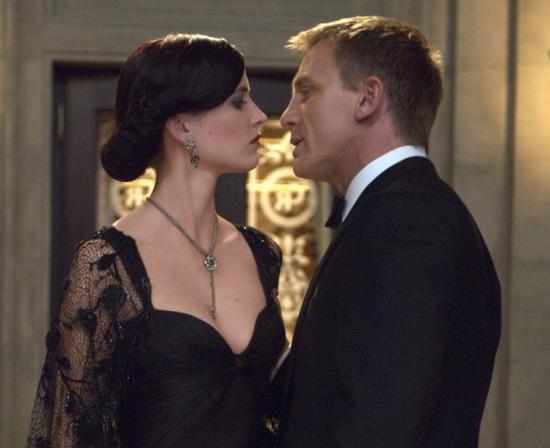
In CASINO ROYALE, James Bond is the Bond girl. Look at the way they even show him emerging from the ocean like Ursula Andress. Sexual torture, too, if less creepy-glam than being stripped and painted gold. Vesper Lynd is Bond: never not in control, never without a plan, seducing to further her goals. She has to die so Bond can become her.
Next time I'll watch the movie through a new lens.


Hat tip: Wil Wheaton

Tuesday, January 25, 2011

January Man

So far, at least, it appears that my January "mostly movies" blogging amounts to only three posts, and just one of those is what you might classify as being "of substance." There's no big reason for the fall-back, though I can jot down three middlin' ones with zero effort:
  • I've been concentrating on other writing projects, most of them reasonably enjoyable and some, I hope, shall prove lucrative. Always a plus, that, in these parlous economic times. I used to get paid for doing this, but these days it's simply a languid pleasure boat down a lazy river rather than a "Thar be deadlines off the port bow!" whaling expedition. I have a handful of posts in various stages of leaky seaworthiness, but don't call me Ishmael.
  • You know when you have a cold? I mean the kind that saps your energy and enthusiasm and the reserved headspace you keep behind the sinus passages. Yeah, that's been me all month, a true rarity. Haven't had a cold hang on like this for years. Ugh. Today's my first day back in Seattle after an unusually long time away (see #3 below), and the cold (or whatever it's mutating into) has really yanked the welcome mat out from under me. My fever now is 102.1° F. As soon as I hit Publish, I'm getting horizontal, maybe with the remote in my hand. Maybe.
  • Been traveling quite a bit, which is great as I love traveling, but doing so puts me in the way of happy distractions that preclude blogging. And it has put me on more than my usual allotment of planes and airports and restaurants and other crowded spaces. I suspect this has a lot to do with #2 above.
    So, in lieu of a full-on post, here's a photo of yours truly that Elizabeth took yesterday afternoon at San Francisco's Cafe Zoetrope, accompanied by Alfred Hitchcock and surrounded by the spirit(s) of Francis Ford Coppola. I recommend the place with gusto. (Yes, yes, I took the cannoli. It's expected, isn't it?)


    Music: Moby, "Run On"
    Near at hand: Kleenex, thermometer (oral, btw)

    Thursday, January 6, 2011

    Kind Hearts and Coronets (1949) — Murder by numbers, 1, 2 ... 8

    Well, it finally happened.

    I've held back this long despite multitudinous temptations dangled before me (I'm looking at you, @ebertchicago). Somehow I've managed to avoid late-night fan-spamming @KevinSpacey. And I can resist, so far, RT'ing the mellifluous 140-character ardor of @stephenfry.

    But I suppose it was inevitable: I've been inspired to rewatch an old favorite ... by a tweet.

    Yes, I looked upon the face of Twitter, and lo! there was @pattonoswalt. Which is a cool thing because I like Patton Oswalt. A lot. His new book, Zombie Spaceship Wasteland, should arrive at my door any minute now [::leaves office, loops around Kai who asks "treat?", opens front door, closes front door, returns to office::] but it hasn't yet. Crap.

    He's funny, he's smart, and he knows how to pair up those two things like red on Twizzlers. His geek culture backstory tracks pretty close to my own. (Oh yes, heh.) I've referenced him already in my post on The Man in the White Suit, wherein I marvel at his ability to make an offhand joke about the Alec Guinness Ealing comedies. So, yeah, I think we'd watch movies quite well together.

    The tweet in question, which he typed during a Burbank outbound flight somewhere between [My 100 favorite movie moments (so far), courtesy listal.com: http://bit.ly/hWyhSm] and [Harold and Kumar Go to Hanging Rock #sinisterfilms], was this:


    Damn you, Oswalt, and the KFC Famous Bowl you rode in on! I had real work to do here, but now Kind Hearts and Coronets was stuck in my head like a favorite Tom Waits song, or the aroma of 7:00 a.m. at Krispy Kreme wafting up from my movie room downstairs.

    We have Apple TV now (did I mention that before? I hooked up Apple TV last week and, oh my, do I love living in the future of Clarke's Third Law), so I can watch Kind Hearts and Coronets and any number of movies via wifi and iTunes on the big screen, under the wrap-around speakers, a fact that fills me with merry boggle.

    But I had the Criterion edition DVD right there on the second shelf down, so I slid the disc into the player all paleo-pre-2010 style. It's been years since I last watched it, which is just too long.

    So hey, thanks, Patton. (Call me.)


    Anyway.

    It was Voltaire, probably, who said that if Alec Guinness did not exist it would be necessary for Ealing Studios to invent him. Guinness' career-making streak in such cracking good London-based Ealing comedies as The Lavender Hill Mob, The Man in the White Suit, and The Ladykillers began in grand fashion with 1949's elegant and cold-hearted Kind Hearts and Coronets. As a black comedy, what it does for the Edwardian England of George Bernard Shaw is what Dr. Strangelove did for the Cold War.


    While playing eight members of an aristocratic family targeted for murder, Guinness apportioned his performance with more than just trying on silly wigs and makeup. No matter which member of the rarefied D'Ascoyne gene pool he played — the bank president, the doddery old parson, window-smashing suffragette Lady Agatha, a general who scoops his spoon into an IED in his caviar, foppish Young Henry, and so on — Guinness gave even the walk-ons a memorable turn.


    Furthermore, a lesser performer (meaning just about anyone) would have larded up the roles into blowhard grotesqueries. As proper for a dry, wry comedy of manners and murders that's "droll" and "brittle" rather than merely "funny," there's nothing ostentatious or look-at-me! about Guinness' multiple D'Ascoynes. (Thus any comparison with Eddie Murphy and the Klumps ends before it begins.) Although today Kind Hearts and Coronets is remembered for his virtuoso showcase, Guinness himself appears to understand that he is not, after all, the film's lead.

    That's Dennis Price, who more than holds his own as the most genteel and cordial of murderers. ("It is so difficult to make a neat job of killing people with whom one is not on friendly terms.") See the original poster art up there? Notice that  Guinness' name appears last after Price, Valerie Hobson, and Joan Greenwood, with only vague visual clues about his now-famous eightfold tour de force. 


    The film opens on His Grace the tenth Duke of Chalfont (Price) penning his memoirs in prison, whiling away his final hours before his hanging. The narrative then unfolds in flashback. Until recently the current duke was, in fact, just a commoner, Louis Mazzini. Before his birth, the haughty family disowned his mother, a D'Ascoyne, for marrying an Italian opera singer, thus denying both mother and son of their heritage and birthright. After his mother dies in near poverty and is refused burial in the ancestral vault, young Louis vows to avenge her and claim the dukedom for himself via a thorough pruning of the privileged and elitist family tree. (TCM clip)


    By nature every inch the English gentleman, Louis is adept at "impersonating a man of sterling character" and ingratiating himself to the heirs ahead of him (each played by Guinness). He understands that, among other "discreet requirements of twentieth century homicide," revenge is a dish best served with a quality port.


    Louis' insouciant callousness gives Kind Hearts its coolly amoral humor. Lady Agatha floats high above London in a hot-air balloon to rain down Women's Rights pamphlets; Louis punctures her balloon and quips, "I shot an arrow in the air; she fell to earth in Berkeley Square." As he kills his way up the peerage, we become co-conspirators amused by such nonchalant doings-in, not to mention the sarcasm aimed at the haute-bourgeoisie in all its inbred snobberies and caste privilege.


    Meanwhile, two women attract his affections.

    The more marriageable is Edith D'Ascoyne (Hobson), the rigidly prim yet appealingly regal widow of one of his victims (Guinness as silly-ass Young Henry, an amateur photographer and secret imbiber). She's a right proper prig, beautiful but exuding the sexual warmth of a marble birdbath, the sort of role that could too easily be played to "frigid" or "riding crop up the ass" stereotypes. Hobson, though, quite handily makes Edith sympathetic and likable, and not just because you ache to touch her cheekbones to discover what a frictionless surface feels like. What's more, her diction would have Henry Higgins bowing down before her. In a movie saturated with impeccable elocution, Edith could enunciate local prohibition ordinances around a mouthful of poor people.

    An example of the film's understated, deadpan tone comes when Louis kills Edith's husband by exploding the potting shed where Henry keeps his darkroom and illicit hootch. We aren't there up close when the shed and Henry go kablooey! Instead we're cozy with Louis and Edith sharing tea in the garden. There's a muffled whoomph! and, up from behind the hedge, a delicately rising billow of smoke. Louis notices, Edith doesn't, and neither the camera nor Louis flinches as they carry on their mundane little conversation.

    The other woman is the sultry beauty who rejected him for being a nobody in their younger days: Joan Greenwood's sensual, butterscotch-voiced Sibella. (The only English actress of that generation sexier than Joan Greenwood was Joan Greenwood speaking. Joan Greenwood as a "talk dirty to me" phone sex worker is a Funny or Die video waiting to happen.) Instead of marrying Louis she upped her social ante with a moneyed dullard who bored her even at the altar. Nonetheless, even while Sibella is married to lackluster Lionel, and he's betrothed to Edith, they maintain a clandestine friends-with-benefits relationship. When a pivotal lip-lock cues the fade to black, and the scene returns with Louis' voice-over, "Time had brought me revenge on Lionel," there's no doubt that the couple did a good deal more than just think of England.

    Friends with b., as Bertie Wooster might put it.
    During Louis' trial for the one murder he did not commit, and while his deferential executioner (Miles Malleson, marvelous) readies the silken noose, Sibella reveals that she alone is Louis' equal in self-interested conniving. (It's a turn that reminded me of Glenne Headly's in Dirty Rotten Scoundrels.) The resulting fillip in the final scene was too much for America's skittish Production Code, which demanded that the U.S. version end with a wholesome yawn rather than a cheerfully nasty smirk.


    Director Robert Hamer (who co-wrote with John Dighton) didn't exhibit the fully cinematic visual talents of his Ealing colleague Alexander Mackendrick. But as a talented craftsman neither did he get in the way of the film's sophisticated charms. In our tiresome era of older films "re-imagined" with abrasive overkill, where would his finely tuned work keeping Kind Hearts low-key and straight-faced go? It's hard to imagine any new version with a cast half this good, or a cast that doesn't lean into each performance until it falls over, or doesn't add blinking exclamation points to the script's flinty one-liners (a script that assumes a certain level of literacy in the audience to boot).

    Something I'd not noticed before: Just before Louis poisons the old duffer Parson by dosing his dram of wine, Guinness as the Parson says to Louis, "The port is with you." I swear it sounds like he's saying, you know, that other thing Guinness said once.

    By the way, click through to the impressively compulsive Clothes on Film > Kind Hearts and Coronets: Decadent Dennis Price for the assessment that "Kind Hearts and Coronets is a tour de force of bespoke Edwardian tailoring."
    "Unlike with modern period films, I can detect almost no obvious violations of Edwardian dress codes – with one exception, when Mazzini wears a frock coat with silk faced lapels to the funeral of one his victims. For funerals, frock coats should be self faced. But that is the only transgression, and a subtle one at that."
    There's the clincher for the pub Trivia Night contest.


    On the British Film Institute's current list of best British films, Kind Hearts and Coronets ranks number 6. In 2000, readers of the U.K.'s Total Film magazine voted Kind Hearts and Coronets the 25th greatest comedy film to date. In 2004 the magazine named it the 7th greatest British film. Total Film also calls it "a reminder that, once upon a time, British cinema could match anything that came out of Hollywood." Like a voodoo curse, saying those words aloud could result in some Hollywood exec green-lighting a modern-day remake.

    No surprise, then, that in 2000 word leaked out about a remake in development, with Will Smith in the Price role and Robin Williams reminding us how great Guinness was. With memories of 2004's dental-drill remake of The Ladykillers in mind, it's a relief to search online and see little evidence that Kind Hearts and Coronets' Mrs. Doubtfire treatment ever left the "let's do lunch" stage. For once, let's leave perfection alone.


    A word about Criterion's two-disc DVD edition while we're here. It's the way to go if you're aiming for the full-on movie buff exposure.

    This restored transfer from a 35mm composite fine-grain master yields a flawless print. The clean black-and-white image is sharper and brighter than Anchor Bay's previous disc, with improved black tones and grayscale. The DD 1.0 audio track is clean, but it's a bit harsh or muddy in spots (presumably from the original audio source track). In the first scene, turning on the English subtitles revealed that the executioner boasts that even his mentor "never had the privilege of hanging a duke" instead of "never had the privilege of hanging a Jew."

    Typically, Criterion's extras are worth the getting all by themselves. Here that means the BBC's 1986 documentary, Made In Ealing: The Story of Ealing Studios (75 mins.), with film clips and interviews with Joan Greenwood, Alexander Mackendrick, and others for a thorough and engaging history of the venerable film factory.

    In 1977, the interview-shy Guinness appeared on Michael Parkinson's BBC chat show, and we get that entire 68-minute episode with Sir Alec at his charming best; among his anecdotes is a spooky forewarning encounter with James Dean and Dean's Porsche 550 Spyder days before the American actor's death in the car.

    Also here are the Code-appeasing American ending, the original theatrical trailer, a vast click-through gallery of production and publicity photos, and a liner notes booklet with an essay by film critic and scholar Philip Kemp.


    Music: My Favorite Things: Coltrane at Newport
    Near at hand: New robot from Janna.

    Monday, January 3, 2011

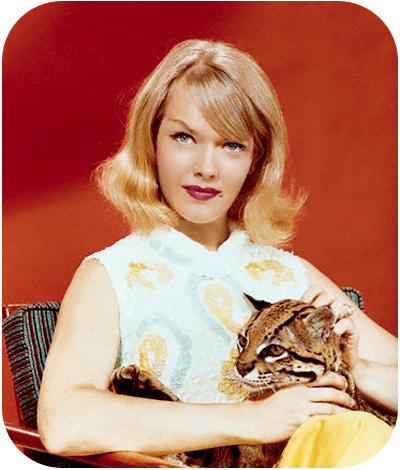
    RIP Anne Francis

    I was wondering why the hits on my Forbidden Planet post were way, way up today. And then I caught the news.

    Sigh. The nicest honey west of Altair IV.

    Ronald Bergan has more at The Guardian.

    Sean O'Neal at the AV Club rounds up good clips and words.